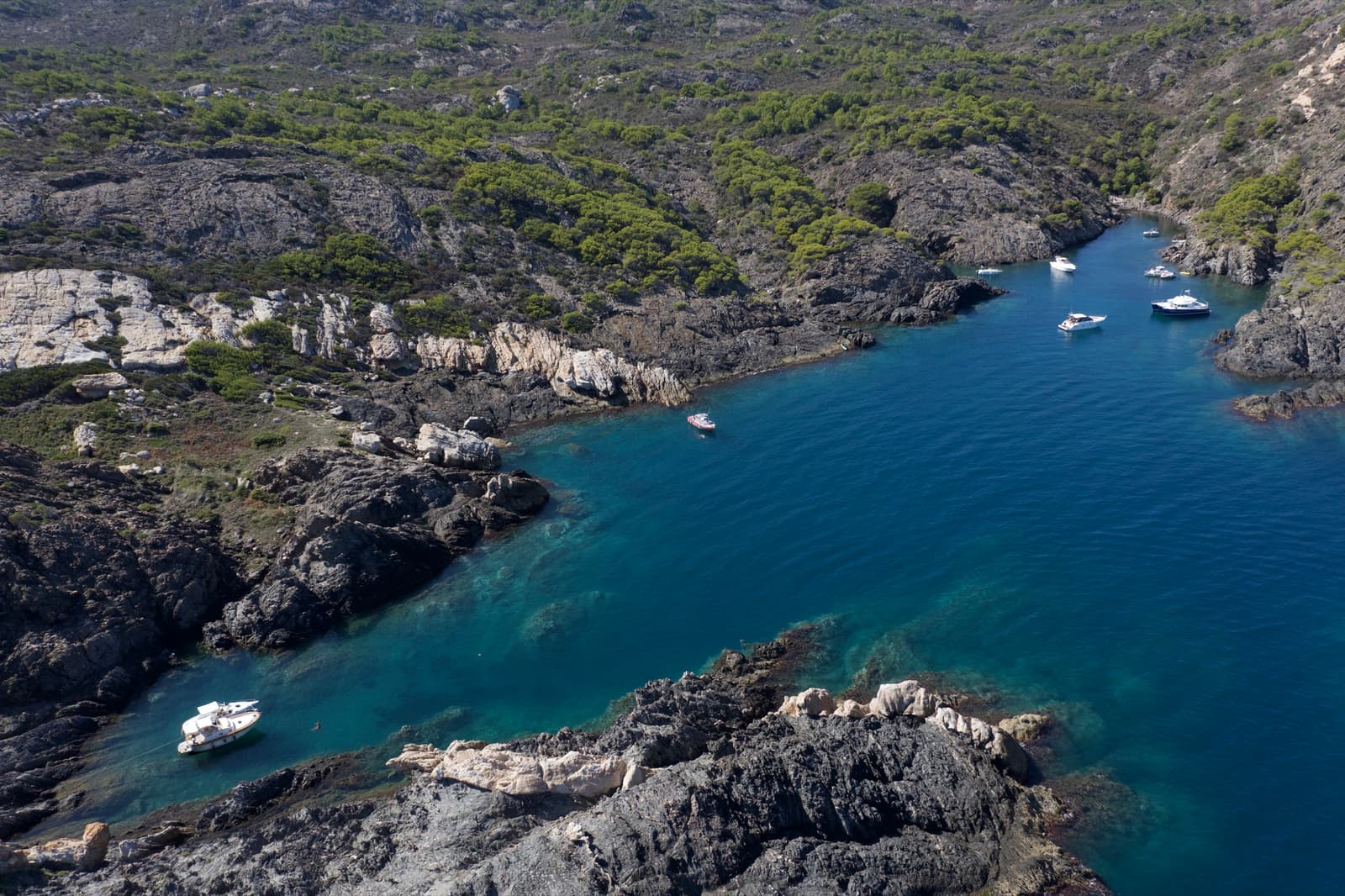
Cap de Creus is the easternmost point of the Iberian Peninsula, where the tramuntana shapes the rock and Dalí found his landscape. From Roses, by boat, you reach almost untouched coves, the iconic lighthouse and crystal-clear waters. Here’s how, when and with whom to go.
Cap de Creus: where the Iberian Peninsula ends
Cap de Creus is the easternmost edge of the Peninsula. The Cap de Creus Natural Park — Catalonia’s first maritime-land park — protects a unique landscape: cliffs sculpted by the tramuntana, rock polished by centuries of wind and sea, and clear-water coves between pine woods.
Salvador Dalí, who lived close by in Portlligat (Cadaqués), drew inspiration from these impossible forms. From our base at Marina de Santa Margarita (Roses), as you sail toward the cape, you’re at the helm — if you don’t need a skipper — or you sit back and let us take the wheel.
How to sail from Roses by boat
To explore the nearby coves in the bay, you can rent a licence-free boat (from €70/hour): calm cruises, perfect if you want freedom without complications. Drop anchor in clear water, take a swim and move at your own pace.
If your plan is to reach the lighthouse and the more exposed cape, we recommend a licensed boat or — better still — a private excursion with skipper: your group, your rhythm, our knowledge of the place. Sunset departures (from €160) are a classic. It’s a longer journey, but worth every moment.
Coves, lighthouse and snorkelling: what to see
Cala Culip is one of the most sheltered and popular by sea, with a rocky seabed perfect for snorkelling. Cala Jugadora and s’Encalladora are wilder and quieter: massive rocks and pines down to the shore.
The Cap de Creus lighthouse crowns the sharpest tip of the cape. The whole site is an exceptional snorkelling area, with posidonia — the lung of the Mediterranean — and varied marine life. Respect the Natural Park: take care when anchoring, don’t touch the rocks and leave no trace.
Tramuntana, best season and what to bring
The tramuntana is real: this north wind can change the sea in minutes. It’s not dangerous if you respect the forecast, but it does decide whether we head to the cape or stick to the sheltered coves.
The best season runs May to October; June and September are ideal. Bring sunscreen, snorkel gear, water and a towel. The Natural Park is not a resort beach: it’s living sea, and that’s exactly what makes it special.
Frequently asked questions
Can you reach Cap de Creus by boat from Roses without a skipper?
To the nearby coves in the bay, yes: rent a licence-free boat and you navigate. For the open cape and lighthouse it’s safer and more comfortable with a licence or a skipper. We offer both options depending on your experience.
How long does it take from Roses to the Cap de Creus lighthouse?
A calm sail is around 45–50 minutes. If you stop to swim and snorkel along the way, add a couple of hours. A typical trip to the cape takes about 3–4 hours all told: travel, exploration and return.
Do I need a licence to take a boat to Cap de Creus?
For the nearby coves, no: licence-free boats are enough. For the full cape we recommend a licence or our skipper. If you’re unsure, we’ll sort it out before you book.
When is it not advisable to go because of the tramuntana?
With strong tramuntana we advise against heading to the cape: it’s a wind that comes down from the Pyrenees and can be demanding. On those days we suggest sheltered coves in the bay or a different date.